
Sky Watcher - November 2025
Comet 3i/ATLAS
An interstellar object is currently making its way through our celestial neighborhood. Comet 3I/ATLAS is the third known interstellar object that has passed through out solar system. First observed on July 1, 2025 by the ATLAS (Asteroid Terrestrial-impact Last Alert System) telescope in Rio Hurtado, Chile, astronomers determined the object’s orbit originated outside of our solar system. The comet’s closest approach to the Sun occurred on October 30, 2025 and will reappear on the other side of the Sun by December 2025.
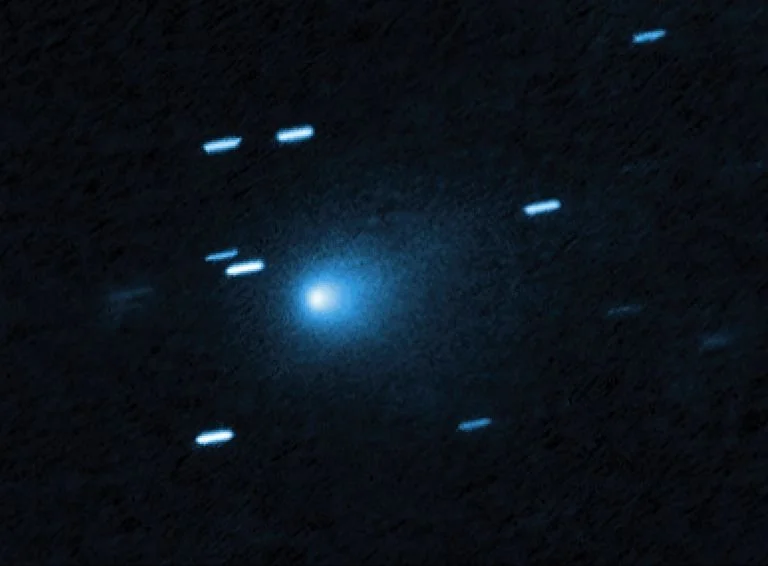
Image Source: NASA, ESA, David Jewitt (UCLA); Image Processing: Joseph DePasquale (STScI) - Hubble captured this image of the interstellar comet 3I/ATLAS on July 21, 2025, when the comet was 277 million miles from Earth. Hubble shows that the comet has a teardrop-shaped cocoon of dust coming off its solid, icy nucleus.
Easy Asterisms
The autumn season in the Northern Hemisphere is host to many famous naked eye asterisms. Asterisms are not official constellations recognized by the International Astronomical Union, but are still patterns we can trace out in the stars. Most famous asterisms are part of a larger constellation or shares the brightest stars of neighboring constellations.
Here are four easy shapes to try to find from your backyard this month:
Cepheus (The Upside-Down House):
King Cepheus is a constellation named after the king of Ethiopia in Greek mythology. Look for an upside-down house in the northern part of the sky around 9pm in November.
Cassiopeia (The “W”):
Cassiopeia, the Seated Queen, is the wife of King Cepheus and mother to Princess Andromeda, another nearby constellation. Look for Cassiopeia’s bright “W” shape in the northeastern sky during the month of November.
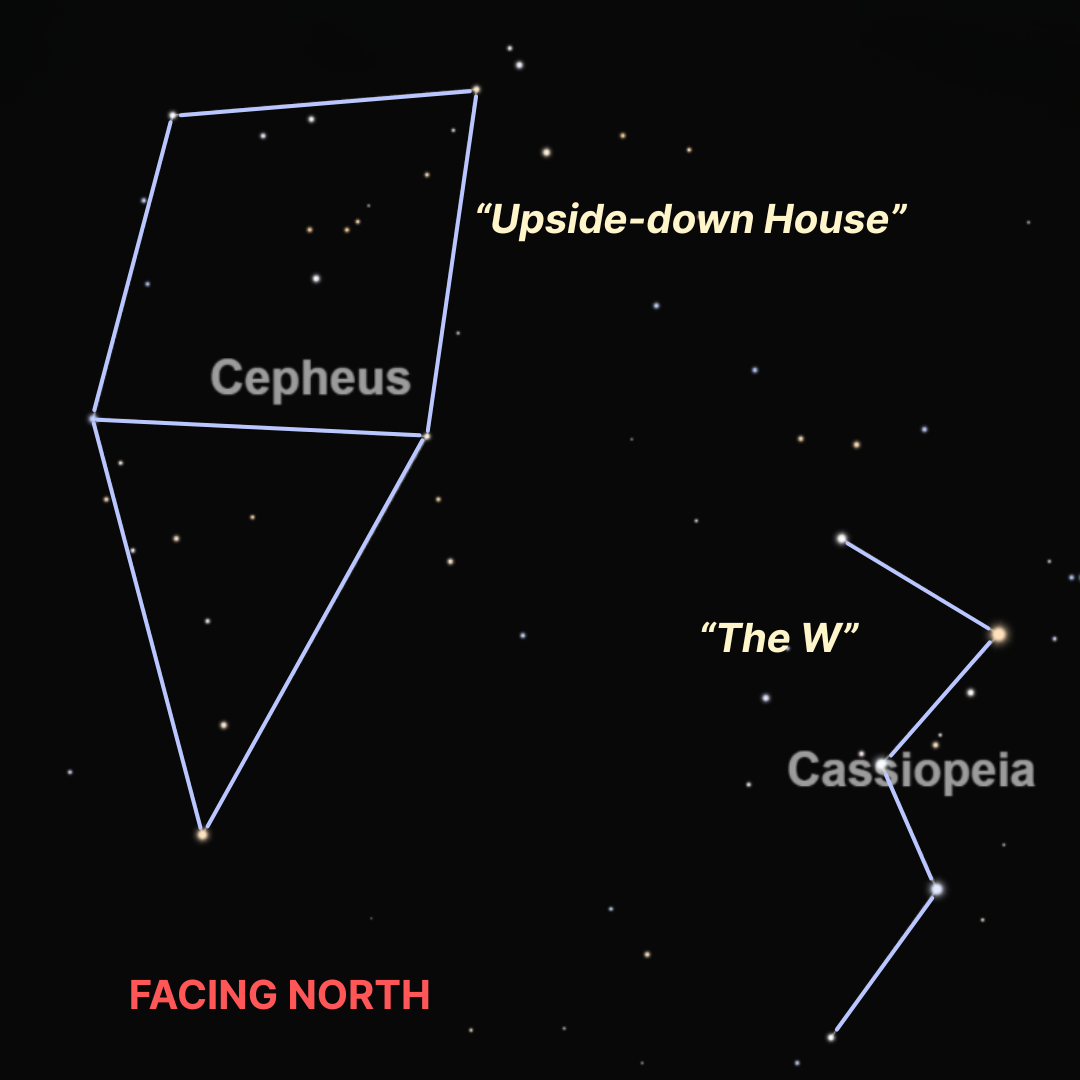
Image Caption: Graphic illustrating the asterisms with the constellations "Cepheus” and “Cassiopeia” in the mid-November sky.
Pegasus (The Great Square):
The Great Square of Pegasus, born from Medusa’s head after she was killed by hero Perseus, is another easy asterism to find during November. The entire constellation is quite large, and fills most of the southeastern sky during late October and early November. The Great Square includes bright stars Alpheratz, Algenib, Markab, and Scheat in an almost perfect square shape. While Alpheratz is included in the Great Square, this star actually represents the head of the constellation, Andromeda.
Pisces (The Circlet):
The Circlet, south of the Great Square, represents one of the fish in the constellation, Pisces. This group of stars are the brightest of Pisces, which is usually a difficult constellation to spot.
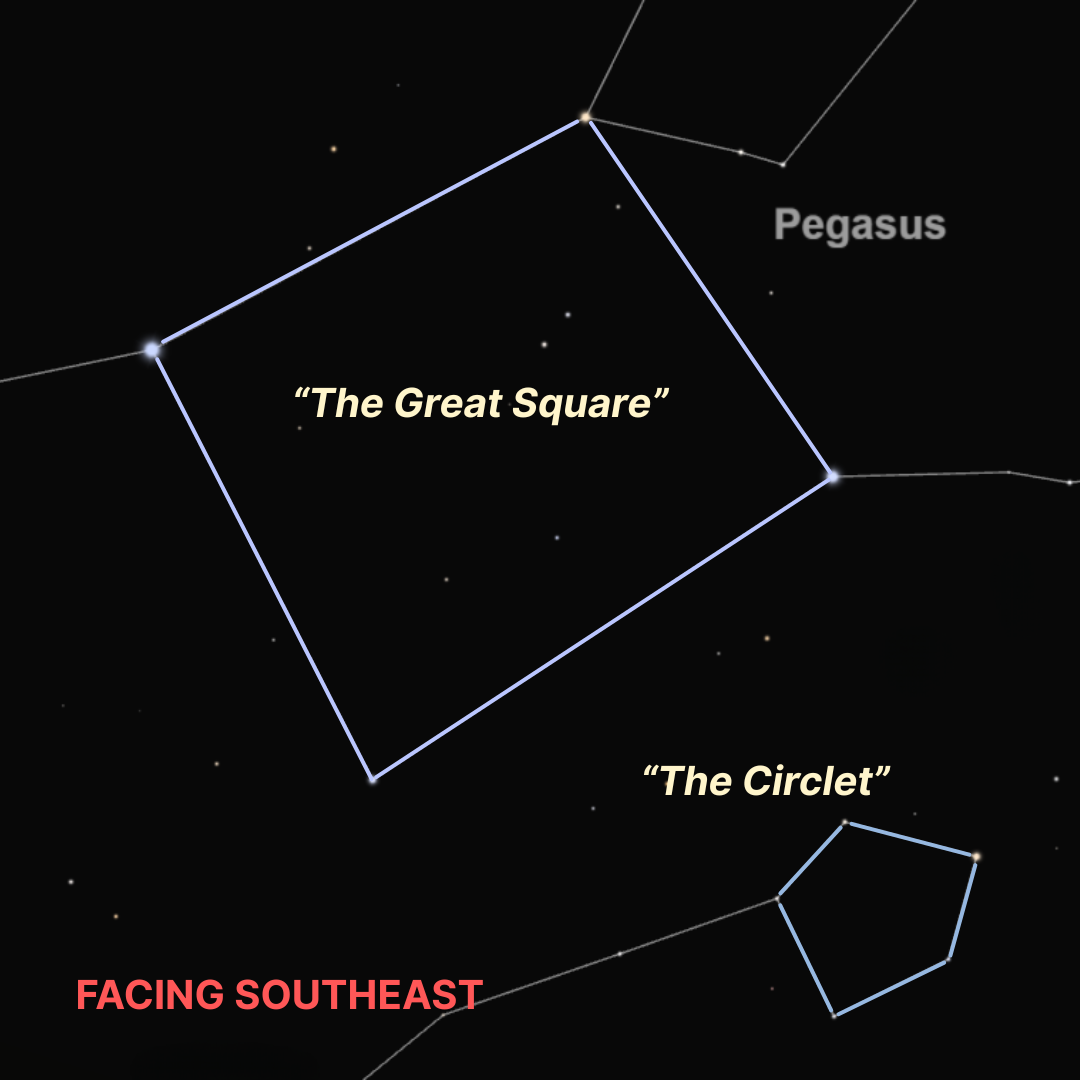
Image Caption: Graphic illustrating the asterisms of the Great Square in Pegasus and the Circlet in Pisces.
November Moon Phases
Full Moon: November 5
*While traditionally the November full moon is referred to as the “Beaver Moon”, technically due to the dates of the full moons this autumn, November’s moon can also be considered the “Hunter’s Moon”.
Third Quarter Moon: November 11
New Moon: November 20
First Quarter Moon: November 28
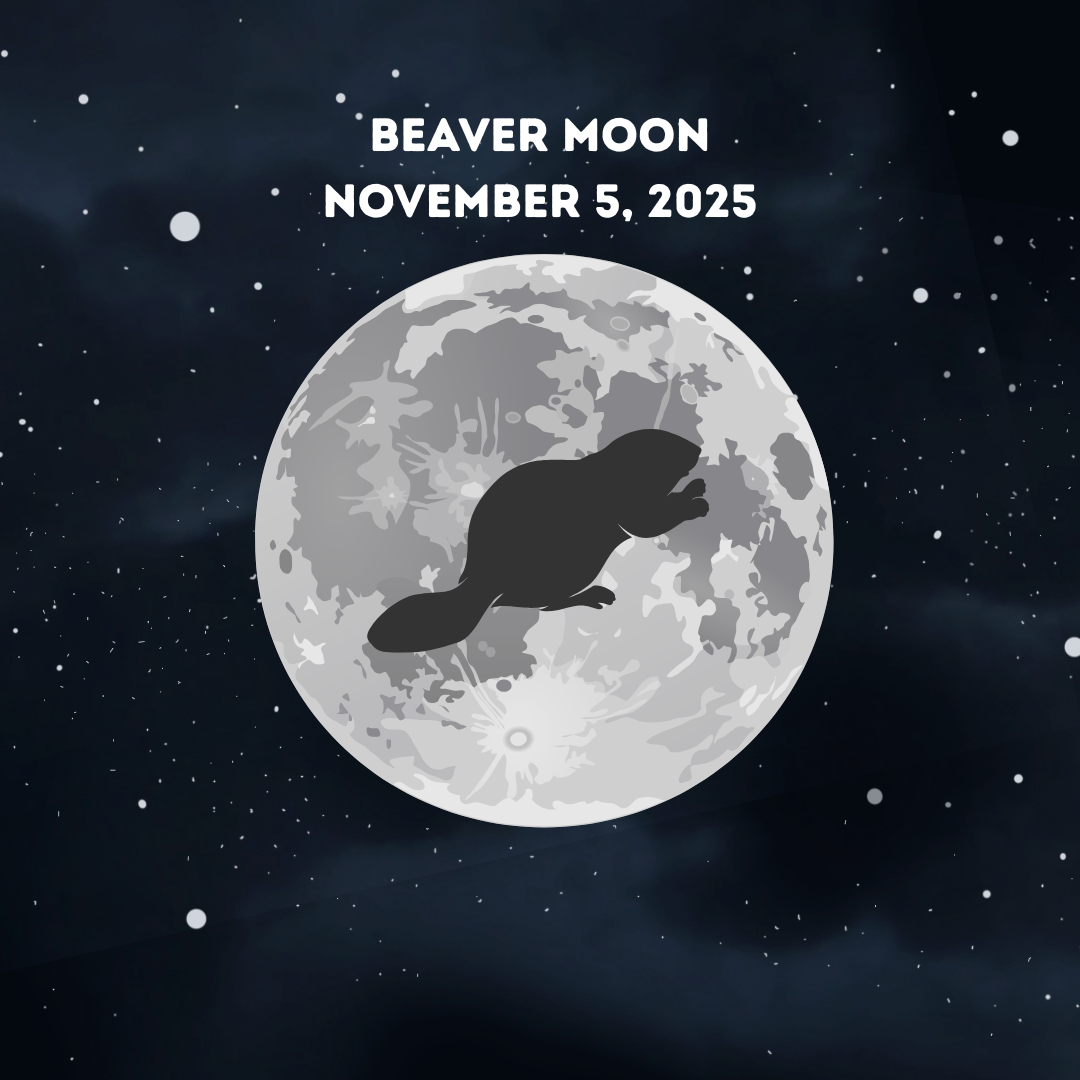
Image Caption: Graphic illustrating the full moon with a beaver shadow.