
Sky Watcher Special Edition - Recent Breaking News!
If you have been keeping up with any science news, you may have heard of some recent new discoveries, Artemis II developments, and perhaps even about the upcoming lunar eclipse in March. Here are some recent headlines and breaking news happening in the astronomy community.
Siwarha: Companion to Betelgeuse
Many star gazers are familiar with the bright star, Betelgeuse, the second brightest star in the constellation Orion. Betelgeuse is a red giant star, destined to one day explode in a massive supernova explosion. In July 2025, astronomers finally announced that Betelgeuse probably has a small companion star which has now been named Siwarha.
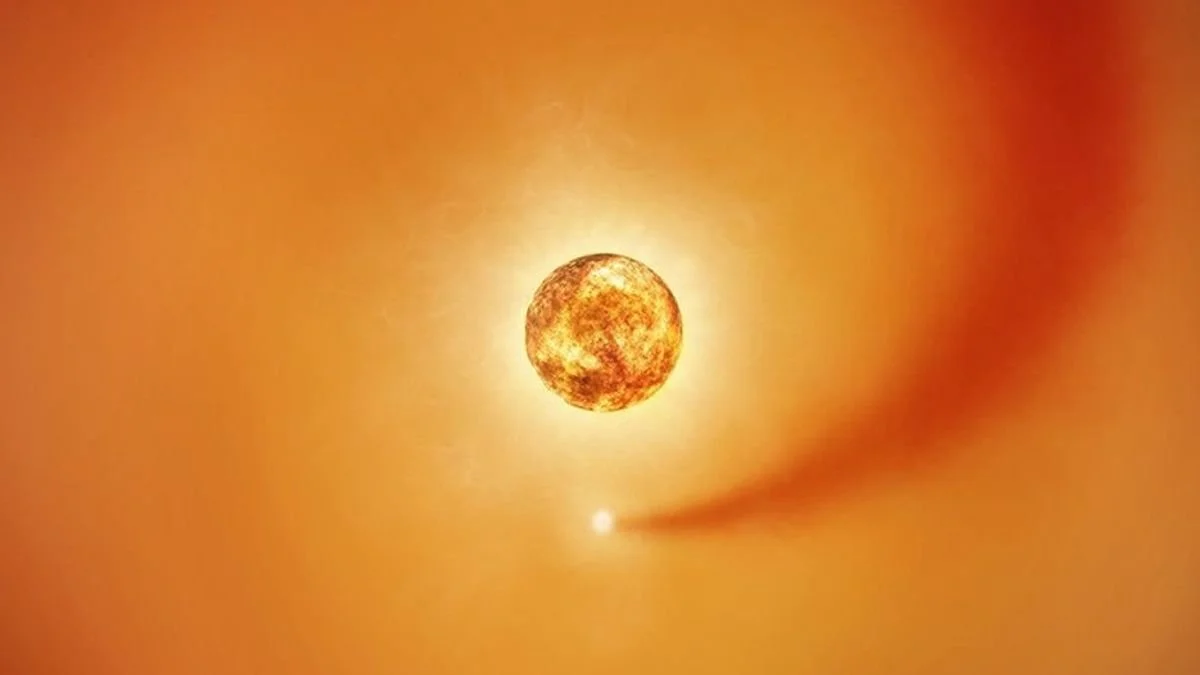
On January 5, 2026, NASA published an article detailing results from a team of astronomers studying Betelgeuse & Siwarha. Using spectroscopic data from the Hubble Space Telescope, the Roque de Los Muchachos Observatory in Spain, and the FLWO Observatory in Mt. Hopkins, Arizona, astronomers reviewed observations for various patterns and spectral lines. The results concluded that the companion star, Siwarha, moves through Betelgeuse’s atmosphere causing "waves” in the atmosphere.
One of the mysteries of Betelgeuse is when exactly it will explode as a supernova, and these results may give us more insight into stellar evolution. Betelgeuse went through a “Great Dimming” during 2020 and 2021, and this very recent discovery gives us a further clue into exactly how stellar atmospheres behave.
Artemis II Rollout & Launch Windows
Countdown for the launch of Artemis II has begun. This weekend beginning Saturday January 17, Artemis II will begin its journey from Kennedy Space Center’s Vehicle Assembly Building to Launch Pad 39B. There are multiple launch windows available for the rocket and crew until mid-April 2026.
Launch Period 1: January 31-February 14
Launch Period 2: February 28-March 13
Launch Period 3: March 27-April 10
Artemis II will carry humans to the moon for the first time since 1972. Astronauts will not land on the moon, but orbit the moon farther than any human has traveled before (about 4,600 miles beyond the moon). The mission will carry veteran astronauts Reid Wiseman, Victor Glover, Christina Koch, and Jeremy Hansen in lunar orbit for approximately 10 days before splashing down in the Pacific Ocean near San Diego.
Media coverage of the Artemis II rollout will begin at 7:00am Eastern Time. Stream Here.
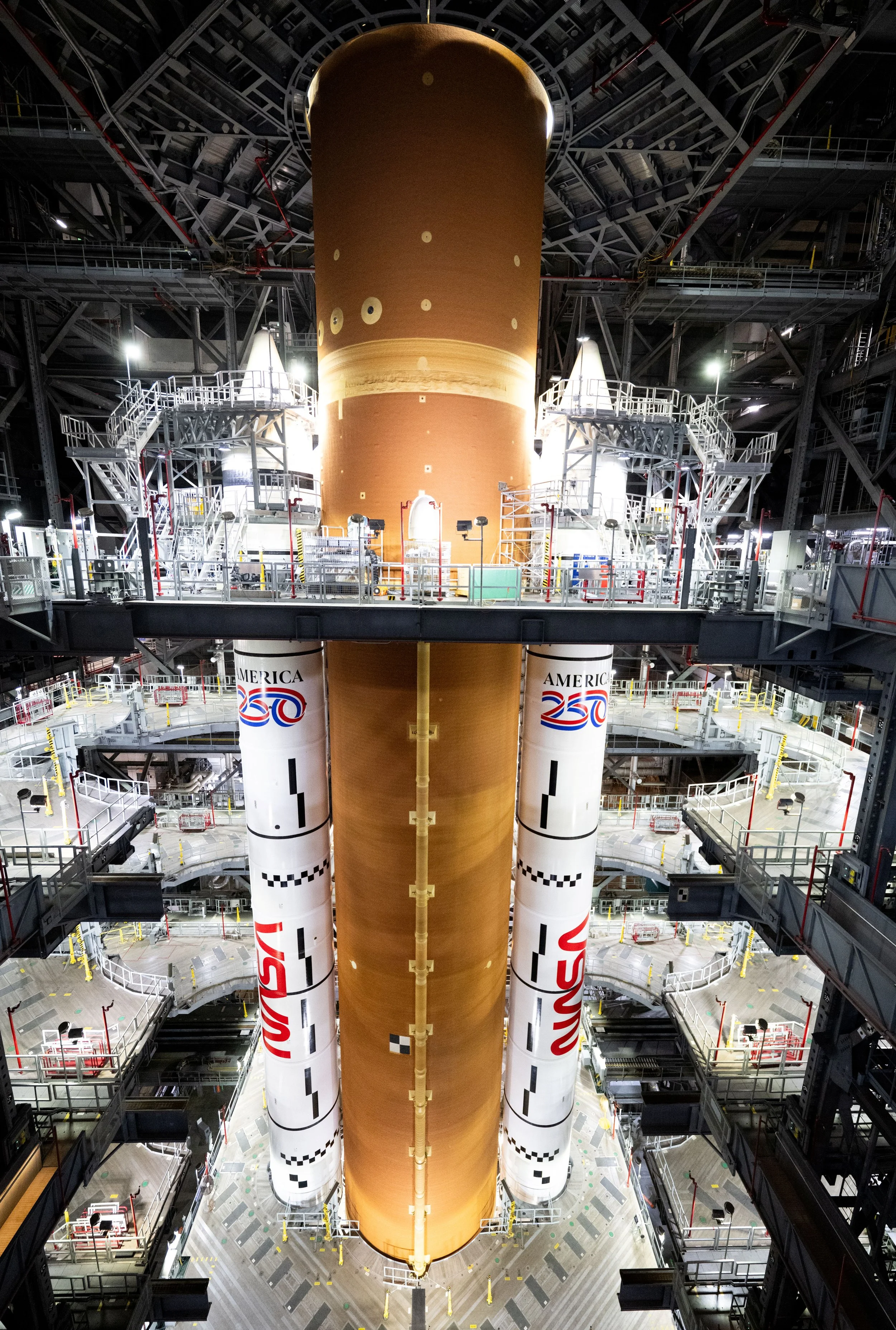
NASA’s SLS (Space Launch System) rocket is seen inside High Bay 3 of the Vehicle Assembly Building as teams await the arrival of Artemis II crewmembers to board their Orion spacecraft on top of the rocket as part of the Artemis II countdown demonstration test.
Mizzou Scientists Discover New Type of Galaxy
Astronomers from the University of Missouri have discovered a new type of galaxy which they have named “platypus galaxies.” Using NASA’s James Webb Space Telescope, Dr. Haojing Yan and his team discovered a group of unusual objects using spectroscopic data from JWST. These galaxies have characteristics of other astronomical objects we have observed before, but seeing these features together is unusual.
Visually, these distant objects are point sources which are normally classified as quasars, which is an extremely luminous galaxy with an active black hole in its central region. But these galaxies have spectroscopic features indicate that these galaxies are actively forming stars. Usually, active black holes and star forming galaxies do not pair up, but in this case the observations prove otherwise!
Further research is needed to fully understand these objects. Investigations into distant galaxies give astronomers further information about the early universe and how the universe has evolved over cosmic time.
Total Lunar Eclipse: March 3, 2026
The next total lunar eclipse visible from Columbia will be on Tuesday March 3, 2026. This lunar eclipse will occur while the moon is setting for much of North American, but if early risers get clear skies it will be fairly easy to see this eclipse in the early morning. The eclipse times for Columbia, MO are below:
Penumbral Eclipse Begins: 2:44am
Total Eclipse Begins: 5:04am
Total Eclipse Ends: 6:02am
Moonset: 6:41am

Image Credit: Val Germann - Image of lunar eclipse in August 2007 with Memorial Union Tower to the right.